Earlier this year I turned 30.
This got me thinking about aging, as well as about how most of the advice I received as a teenager and college kid was practically useless.
I’d like to make sure any zoomer ENTPs who read this aren’t left in the same position.
Lesson 1 – Pick the right role models to develop appropriate heuristics
There are few greater wastes of time than spinning your wheels on a problem someone else has solved. As a young person you obviously should look for an older mentor who can point you in the right direction and save you valuable time by sharing heuristics you can use to navigate an incredibly complex world.
The difficulty is that the world is *too* complex for anyone’s heuristics to be universally applicable, as the associated generalizations and principles necessarily emerge from the limited experiences and insight of one individual. Obviously we all have very different experiences and opportunities, and what worked for Peter won’t necessarily work for Paul. Adopting heuristics poorly suited for your personality or situation in life can actually leave you worse off, and either mired in cynicism/insecurity or unrealistically optimistic about your chances. This is especially true for your career and for dating.
ENTPs must be particularly careful about this because our dominant Ne makes us very prone to seeking out information from a wide range of sources. Paired with Fi blindness this tendency can lead to deep existential confusion and eventually dissociation if trusted sources ever become contradictory. For this reason we must constantly audit and tweak our heuristics with Ti to ensure we are maintaining an accurate and confident mental model of the world.
We also must refine Fe to better understand what could cause someone to adopt a certain worldview without embracing it ourselves. This begins with the realization that anyone’s ideas about How the World Works will inevitably stem from their own cognitive biases and defense mechanisms. Everyone paves a unique path to success using their own particular talents/resources to overcome or sidestep their individual limitations and insecurities. We all mythologize our own story, and on some level think it’s the Right Way To Do Things.
It’s also human nature to surround yourself with people of a similar background who share your sensibilities, and this can create a feedback loop where people lose sight of alternate paths to success and begin to inappropriately universalize their own experiences. When you notice that someone’s observations don’t track with your own at all, it is likely that one or both of you have fallen prey to this tendency. Developing your Fe and Si will help you come to this realization more quickly in those situations, and will enable you to extract useful information that broadens your worldview and can make your personal heuristics more nuanced without becoming incoherent or contradictory.
The upshot is that if you are a unique or eccentric person you need to find successful people of a similar disposition and observe how they made it, as most mainstream advice will not apply to you, or will be so obvious and unspecific (drink more water and invest in index funds!) as to seem completely banal. You need to see a realistic model of how you could turn out in a few years if everything goes right. This will help you determine which of your eccentricities are real impediments to your goals that should be filed off ASAP and which are harmless and safe to indulge.
In my experience the best mentors are usually 8-15 years older than you. This gives them enough experience to speak with expertise but enough proximity to you in general life stage to empathize with your problems and somewhat understand the cultural ecology you inhabit.
The more unusual your problems the more you’ll have to iterate and develop your own heuristics over time, but the right mentor will make this process significantly easier and help you identify blind spots.
As a kid I loved my birthday.
Not for the presents or attention, which even at 8 I found unwarranted and gauche, but because it felt like “leveling up”. Birthdays to me meant being taken more seriously as a human being and gradually unlocking new privileges of adulthood.
As a child there is something spiritually significant to your birthday because it accompanies a fundamental change in who you are. Every year you further transcend the impulsive short-term selfishness we associate with wild animals, toddlers, and the criminally insane. Each year you become more of a complete human being with free will and the capacity for planning and deferred gratification.
At least that’s how it’s supposed to go.
Lesson 2 – Maximize personal agency by actively manipulating your short-term incentive structure in pursuit of long-term goals
The biggest obstacle anyone can face in life is an inability to control his own actions. The best devised plan immediately becomes worthless if you can’t trust yourself to follow through.
But relying on sheer discipline to get through something unpleasant for a long-term reward isn’t realistic. The modern world offers too many dopamine traps to shorten your time horizon and keep you stagnating in disassociated mediocrity. There are too many things that can go wrong and set you off track, especially for a novelty-seeking and risk-tolerant personality like your average ENTP.
So accept that you will have moments of weakness and that your willpower is limited. Don’t try to be disciplined in the moment when the temptation is right in front of you, but rather when considering your life and long-term goals more abstractly. Use Ti to actively shape your incentive structure to make bad decisions much less pleasant.
For example, instead of trying to force yourself not to eat that brownie, try wearing a pair of pants two sizes too small and watch how much easier it is to abstain walking around with crushed balls and exposed love handles. If you’re trying to quit porn, sell your laptop and move your desktop to a common room in front of a window without blinds. When you’re about to make a big move, think about how the new environment will impact your incentive structure assuming you become the laziest and most indulgent version of yourself.
Recalibrating your hedonic calculus like this will change your behavior on the margins and make a material difference over time.
I stopped enjoying birthdays after 21, which is when you stop unlocking things (unless you really care about cheap car insurance or want to run for Congress). At this point getting older no longer confers power unless it’s accompanied by a commensurate increase in accomplishments or status.
Still, in your early 20s getting older is more of a neutral thing than a negative. You don’t feel yourself age at this point, and won’t get uglier every year unless you’re a junkie well below the poverty line. This means you can easily afford to ignore Father Time and screw around if so inclined.
Lesson 3 – Optimize your life around flexibility so you can easily jump on opportunities
Your greatest strength as an ENTP is your ability to sniff out unique opportunities using Ne. You will never have more opportunities than you will in your 20s, so make sure it’s logistically possible to take advantage of these opportunities as they arise.
For instance, chances are very high you’ll need to move several times throughout your 20s to pursue the most gratifying relationships and professional opportunities. With this in mind I strongly suggest renting instead of buying.
It is classic ESTJ boomer wisdom that you should buy land ASAP to start building equity, but if you actually look at a mortgage amortization schedule you’ll see that you’re mostly just paying off interest for the first few years. Given how high rates are right now this makes buying really sub-optimal. Unless you’re in the early stages of a bubble you’ll need to hold at least 5-10 years to make a decent return, and that time horizon will never line up with the flexibility a 20-something ENTP needs. Don’t just buy because your ISTJ gen x mom who never experienced high interest rates as an adult tells you to.
If you take my advice and do choose to rent, I also suggest shooting for a month-to-month payment structure instead of a fixed term lease if possible. Knowing that you won’t be on the hook for rent and can always move will do wonders for your mental health and make you feel a lot less like a serf
Also please learn from my mistake and don’t spend a ton of money on furniture when you’re young (other than your mattress, which has huge returns for sleep hygiene and therefore all dimensions of health) because the moving guys always break something. You can get nice stuff for cheap on FB marketplace or antiquing.
Let’s talk career next. It will strongly benefit you to secure a purely remote role, as this will sever the link between physical location and source of income that immiserated ENTPs for generations. Chances are the life you want is going to change every few years, if not every year, and it will really hold you back if you need to time lifestyle changes around job hopping.
When you work remotely that concern goes away. If you want to tour the country in a van or hike the Appalachian Trail you can. If you want to bunker down in a meth-addled trailer park in West Virginia and consume nothing but beans and rice as you stack cash for early retirement you can. If you want to buy a luxury condo downtown and get laid all the time you can. If you want to knock up your INFJ honey and settle down in suburbia you can.
Whatever you do, don’t frivolously make commitments that could tie you down, because you will either need to break them and develop a flaky reputation or you will resent people for holding you back. Definitely don’t make big career or lifestyle sacrifices for a romantic partner unless you are reasonably certain you want to marry them, in which case go for it.
But if there is any hesitation whatsoever I would say it isn’t worth it.
Around the time I turned 26 birthdays went from neutral to mildly annoying.
26 is a big milestone because it’s the start of your “late 20s”. You get kicked off your parents’ health insurance, so a corporate wagie job with benefits begins to feel a lot more necessary. It’s also around this age that living at home is no longer excusable per the sensibilities of mainstream society. People demand self-sufficiency from you.
Your mid to late 20s is also when your lifestyle begins to catch up with you. Hangovers become much worse and you can’t get trashed on weeknights anymore. If you get fat or only sleep three hours a night it will severely hurt your energy level in a way it never did a decade ago. If you want to live exactly the same way you usually need to start slamming amphetamines.
Oh, and I hope you’ve been good about brushing your teeth!
Lesson 4 – Don’t live like a child
While per Lesson 3 it is important to give yourself space for flexibility and eliminate logistical restrictions imposed on you by the outside world, you also need to use Ti to very deliberately impose limits on your personal freedom. That can mean formulating a personal code of conduct which includes hard lines you never cross, or it might mean actively shaping your surrounding incentive structure per Lesson 2.
You need to do this because it’s frankly intoxicating to have total control over your destiny for the first time, and this can lead to bad decisions. As a child you couldn’t just tell your parents to fuck off whenever they said no, but as a talented ENTP in your mid 20s you will eventually reach the point where you don’t have all that much tying you down, and are desirable enough to easily replace your job or your friends or your lover whenever they start to annoy you.
As a young ENTP this might sound fantastic, and it can feel that way in the short term. But as you age you will develop inferior Si and start to envy people who have relationships going back forever. People are less fungible than they seem at first glance. Having a shared history matters and opens up room for more complex relationship dynamics you can’t get if you’re constantly jumping around.
More importantly, you will quickly find out that when you optimize your life around the ability to tell everyone to fuck off you start to go a little insane.
The world is too complex for us to navigate purely through our own rational judgment. Sometimes you need to outsource decisions and judgments to others to spare yourself the intellectual and emotional effort.
ENTPs can probably get away with not doing this more than any other type, but in the end it will isolate us and narrow the scope of our opportunities. We just become a dissociated poltergeist who doesn’t feel any connection to anything because we severed all real obligations years ago.
Also when you feel you can walk away at any time you often find yourself torching really valuable opportunities just because you’re tired or hungry or horny. You let your mood dictate your action like a young child because you’ve gotten too used to doing whatever you want and telling people who reproach you to kick rocks. This will quickly set a hard ceiling on your success.
As ENTPs we don’t want to be controlled, but by systematically eliminating all the factors that once controlled us we just become slaves to our own short term impulse.
Part of our identity is being a contrarian truth-teller, but if we don’t have anyone to push back against we’re left impotently floating around the abyss, like an astronaut severed from a space station.
As ENTPs we want to be genuine. But is it genuine to act without any careful reflection or deliberation and in accordance with your changing appetites and animal instincts? Or is it most genuine to act in pursuit of a timeless ideal you might fall short of but represents behavior your Ti has designated most optimal?
I think the answer is obvious.
Your mid to late 20s is also when you start to see people rapidly diverging in status and power.
In college some people are more popular/attractive/wealthy than others for sure, but this matters much less than it did in high school. On your typical campus the vibe is egalitarian and it broadly feels like everyone is competing in the same weight class socially.
This general mentality continues through your early 20s as people try to maintain college friendships through their first adult jobs and grad school, but around 25-26 people stratify hard and fast and this really sneaks up on you.
One day you’ll log onto Facebook and see some of your former classmates making $200k and taking extravagant vacations every year, while others still live with their parents and never manage to build a career of note.
Lesson 5 – Money is extremely important, so go get that bag
Lots of people will tell you money can’t buy happiness.
This is mostly false.
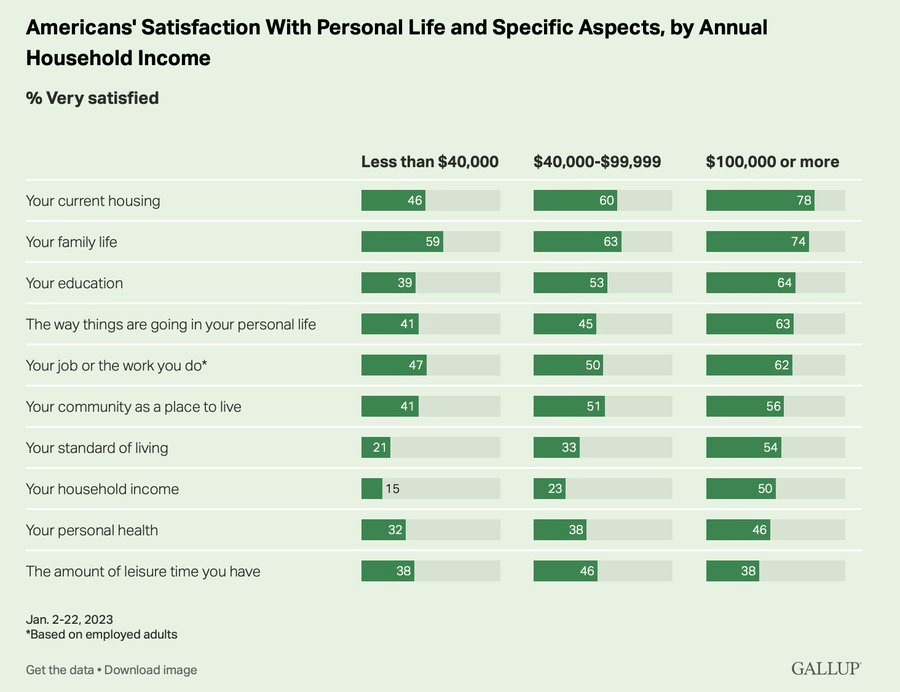
It is true in the trivial sense that plenty of wealthy people suffer from depression and anxiety or addiction. But the more money you have the more tools you have to fix these issues as they pop up (therapy and drugs are expensive!) and the less dangerous your coping mechanisms become. Addiction hurts the working class so badly because they literally lack the resources to consistently pay for their dopamine traps. Meanwhile if you spend time around rich people you’ll meet hundreds of functional addicts.
For an ENTP in particular, making money is essential because you need resources to throw at your crazy ideas. If you want to be a successful entrepreneur you need capital to burn. More importantly, you need a network of potential investors and advisors that becomes hard to obtain if you don’t have access to upper class people through your professional and social network.
For this reason it’s extremely important that you figure out some way to end your 20s with a high income.
So how does one do this?
Well, just getting a middle class income is fairly easy. Simply figure out a way to provide value to rich people. But this shouldn’t be your goal.
To become solidly upper-middle class you’ll typically need to acquire a credential gatekept by a professional licensing organization. These credentials are what make you money because they represent an artificial restriction on the supply of labor and distortion of the free market–you are benefiting from monopoly pricing.
Sadly it turns out a lot of professions that fall under this category don’t have a good value return for the amount of time and money you need to spend pursuing the credential in the first place. Most lawyers are not remunerated well at all, and it takes FOREVER to make bank as a doctor. So don’t necessarily go for the most conventional and high prestige fields.
I would instead look at something like actuarial exams or a coding bootcamp. Find credentialing regimes that let you self study and breeze through the material if you have a high enough IQ. This lets you merge into traffic with your peers if you neglected your career early in life.
Once you get a decent credentialed job you can maximize long-term income by following these principles:
- Don’t expect your annual performance raise to ever be much above inflation. Big raises come from job hopping, furthering your credentialing, and situations where your company desperately needs you.
- Don’t always take the offer with the higher salary, especially when you’re very young. Assess how much work the job is, what connections you’re likely to make, and what skills you’re likely to develop. See the bigger picture. When you’re 23 it doesn’t matter that much whether you’re paid 80k or 90k, what matters is whether your position sets you up to make 150k or 400k by the time you’re 35.
- Always ask for a signing bonus. Your HR lady and hiring manager will have a lot more room to give you money as a lump sum than as part of your salary. Also take advantage of company referral bonuses; at my last job I made like 20k just convincing my old coworkers to jump ship. These one-time payments can really add up.
This advice will help you ascend into the upper-middle class. To get an income that qualifies as upper class is a different exercise entirely.
Here everything starts to become about SCALE. You need to find some value-generating enterprise and scale it up in a way other people can’t–sometimes because they don’t have the brains, but more likely because they don’t have the balls.
Your value add no longer comes from running some particular process as effectively as possible, but rather from extracting as much value from other people as you can.
That means growing comfortable being a little predatory and getting into conflicts with people. You can’t be cowed by the possibility of lawsuits or bankruptcy. A lot of the risk-averse logic of the upper-middle class starts to hurt you in this sphere and you need to start thinking more like a plumber or mechanic.
Beyond that, scaling up a business venture is a lot less formulaic than earning a credential and it’s difficult to give you concrete advice.
What I will say is that I don’t think climbing the corporate ladder into executive management is the best route for an ENTP. I tried that and was miserable working 90 hour weeks and pretending to be an ENTJ all the time. In most corporate positions once you get promoted to manager you will experience a 500% increase in responsibility and get like a 20% raise if you’re lucky. Te doms can handle this well and for them the juice is worth the squeeze. For us I don’t think that’s the case.
If you want to make real bank as an ENTP the best routes are entrepreneurialism or figuring out creative ways to juice the system in ways few people have thought of.
I can’t say any more because I don’t want you stealing my idea, but if you actually deserve this kind of income I am confident you will figure out your own way to get there.
The most important thing is to keep yourself moving–always hungry and ambitious and engaged. Complacency is an ENTP’s downfall.
I think your late 20s are especially hard to deal with as a girl because of the looks question (plus the looming issue of fertility). Some girls still look 19 at 26 because they can afford top-shelf beauty products and maintain an immaculately healthy lifestyle, but the ones who binge drink and can’t afford elaborate vitamin shakes or Korean snail cream will start to noticeably fade around this time, and this has a tremendous impact on how they are treated by the world.
Meanwhile as a man 26-27 is when looks start to matter a lot less, because you now have enough experience and money to date women in their early 20s as a “cool older guy”. If you are successful enough you can stop caring about your looks entirely.
This takes a lot of the edge off aging for men, but birthdays still aren’t especially pleasant because we only benefit from this dynamic if we are upwardly mobile. There is a pressure to succeed economically that doesn’t really exist for women in the same way. This means every birthday will invoke questions as to whether we’re rising up in the world at a sufficiently fast pace.
In fact, the men I knew who never got a decent job experienced aging in their late 20s even more harshly than most women because of this.
Lesson 6 – Be realistic in your dating strategy
People don’t like to talk about dating in a reductive or mechanistic way because it feels dehumanizing. They want to believe everything is about serendipity and some kind of metaphysical connection between two people. And some people are indeed born so attractive and well adjusted that the world is exceedingly kind to them, and they can get what they want without ever thinking critically about the mechanics of the dating market.
With the proliferation of dating apps most people won’t have that luxury. They would be a lot better served if they were more brutally realistic about their options, even if people more attractive and successful than themselves have made it low status to verbalize these concerns.
My advice to male and female ENTPs will be very different because this is honestly a world where men and women experience the world completely differently regardless of MBTI type. It seems a lot of Ti people want to adopt a very androgynous view of the world and are uncomfortable talking about “gender stereotypes”, but gendered thinking is usually very appropriate when it comes to dating.
ENTP MEN – Don’t be pessimistic if you were bad with women in college. Intellectual men are typically late bloomers and do much better dating girls younger than themselves. Hit the gym and focus on your career, and try to avoid falling down Ne rabbit holes looking at increasingly depraved porn. Get a nice high-rise apartment downtown and decorate it tastefully. Just having a bed frame and anything on the walls will put you at the 90th percentile for straight men your age.
If you stay on an upward trajectory you will come into your masculinity in your mid-20s and start to rack up a Genghis Khan-like body count. Your challenge will now become not acting like a fuckboy who uses shallow Fe to take advantage of girls without even realizing it. Once you can reliably get women it will be hard for you to settle down and stay monogamous because your Ne will constantly be prodding you to try out different types of girls, and if you don’t check that tendency it can turn into a sex addiction. To that end I strongly suggest keeping up with your hobbies so you can channel Ne into that instead.
You don’t really need to worry about age because there will always be young girls looking for an older guy. But this only applies if you are successful in at least one dimension. No girl fantasizes about a “cool older guy” with no talents or interesting life experiences who works at the gas station.
Generally speaking I’ve found relationships are comfiest with an age gap of a few years. Today as a 30 year-old I prefer women in the 23-26 range. Any younger and they probably are too flaky to show up for dates and usually have horrible woke opinions. Any older it starts to feel like a job interview and sounds dumb when she calls you daddy.
You will probably find it easiest to attract INFJ women, but this doesn’t necessarily mean they are the best for you long term. This match requires a lot of maturity from both of you to maintain past the honeymoon stage, and there is a good chance it will end with you getting door slammed and called a narcissist. This match honestly deserves more analysis, so I’ll give it its own article one day.
INTJ women are hot af and will never bore you, but if you live with them your lifestyles will clash pretty hard. There is a good chance she’ll end up seeing you as an oafish manchild and you’ll see her as a nagging virago. They are great for short term flings and FWBs though.
ISFJ women are lower maintenance and the best choice for supporting you logistically as a housewife etc. You won’t fight with her as much as you will an INFJ or INTJ, but you’ll probably hurt her feelings a lot if you aren’t careful. Main thing is you need to make sure you have enough going on in your life to feel stimulated, so she becomes the safe and comfy retreat you come home to and relax with.
xNFP girls in my experience don’t want us as boyfriends because of muh values, but they make great platonic friends or FWBs. I don’t think it would work out well dating them though; they seem to start fights with their BFs over the dumbest shit. Leave them for IxTJ guys who can stoically handle their volatility.
Finally, ENTP girls are not a good match IMO because both of you will always want to be “star” intellectually. Competing over that constantly is going to turn toxic long term.
Speaking of!
ENTP Women – I won’t presume to mansplain how to be a girl to you; I’m sure the ENTP gals my age can handle that between their PowerPoints and spicy margs.
What I will say is simply attracting a man will never be your problem. I have consistently observed ENTP women aging better than other types well into their 40s, prob due to a combination of Ne liveliness / interesting fashion sense and a high enough IQ to make good money. You also have enough Ti to know not to get fat because that severely hurts women’s life outcomes. Finally, your personality will naturally place you in ecologies where lots of high quality men can be found.
But it also seems ENTP women stay unmarried a long time, facing the same commitment issues as ENTP guys except with a more limited window of fertility. I expect your main challenge is going to be deciding whether you actually want kids, and then weighing that determination against long-term fertility and career considerations. Because you are an ENTP, these variables will perpetually be in flux, and you will need to periodically revisit them through the twists and turns of your life. There is a good chance your attitude will shift a lot back and forth depending on who you’re with, where you live, where you’re working etc. You need to make sure your feelings on this remain up to date with your practical circumstances!
This will be a hard decision for you because being a mother requires you to give up parts of your individuality in a way being a father just doesn’t. ENTPs are pretty selfish at the end of the day. I feel very lucky to know I can easily find an IxFJ housewife to do all the hard shit and society will think of me as a good dad so long as I bring home the bacon and do the bare minimum beyond that. An ENTP mom will need to spend way more time on tedious babby chores that will gnaw on you over time. It’s probably a good idea to make sure your household can afford a nanny so you have some space and don’t start to resent your children.
As for which type of man to choose, I think for your average ENTP woman an INTJ or ENTJ about 6-8 years older than her is the best bet for creating a satisfying gender polarity. Most other types of guys they will easily dominate or will find too unintellectual. An INFJ guy could probably work as well, but in that case the age gap should be even bigger.
29 was an especially hard birthday for me because it felt like the “end of an era”–the last days of my youth. There was a sense of doors closing and possibilities slipping away, which for an ENTP feels existentially oppressive.
I still had the notion that I could do anything I wanted. What bothered me was that I felt I could no longer do so as “the young guy.”
I had always been younger than most of my peers, and that dynamic had begun to seep into my identity. The idea of potentially retraining or starting some new venture as a relative geezer was straight-up uncomfy.
Lesson 7 – Identify with your intellectual journey, not the destination
Fi blindness means ENTPs often have a hard time coming to grips with who we are and what we value. We are good at being objective and separating ourselves from an issue, but we can become a little *too* good at that and start to lose track of what we actually want. It’s easy for us to get so focused on nuance and precision that we’ll qualify our ideas out of existence or abandon the forceful clarity of purpose you need to accomplish anything in the world.
This is complicated by the fact that tert Fe lets us charm people pretty easily and makes us fantastic at bullshitting. Note there is a difference between bullshitting and lying. We are usually pretty bad liars (certainly compared to XNTJs). But we are very talented at stretching the truth or crafting a self-serving narrative that contextualizes incontrovertible facts into a distorted representation of reality that makes us look good, and which we immediately believe ourselves with absolute conviction. INFJs have the same ability and it’s why we get along so well.
But while INFJs will bullshit their way along a trajectory they pretty meticulously cultivate in advance via Ni, an ENTPs will launch himself into ridiculous situations via Ne and then use Ti/Fe after the fact to make everyone else indulge his ridiculousness. Think Kramer’s antics in a typical Seinfeld episode.
This can get you a reputation for being unserious or unreliable or inconsistent, and it’s easy to resent this and want to change.
You can certainly try to restrain this behavior by acting more like an INTP and only sharing insights after they’ve been fully audited by Ti, but this will cripple your effectiveness. You don’t have the Ti of an INTP and can’t compete with them on their turf.
Your advantage comes from your Ne firehose of creative energy. And sometimes you need to point your firehose at the ground and launch yourself into the air with reckless abandon, even if you aren’t sure where it will take you.
Sometimes in the exuberance of unrestrained Ne you will do things you later think are cringe. Sometimes you will end up advancing contradictory ideas without realizing it or will decide you need to change your entire ideology on a dime. This is all to be expected when you ride the Ne firehose.
The important thing is to never get too attached to where precisely the firehose takes you, and never be embarrassed by where it took you in the past. The destination is never that important. You’ll always have a new one soon enough. Instead identify with the firehose itself–the hose is who you are, not the bush you landed in!
You can avoid the worst of people’s hostility to your Ne if you make sure they know what they’re getting with you in advance. Frame your ideas as brainstorming instead of serious proposals. Make your volatility and novelty seeking known to prospective romantic partners.
Some people will still hate this about you, but I say fuck ’em, you aren’t doing anything wrong. The people you want to attract are the ones fighting to shove your firehose down their gullet.
Looking back I think 29 is just kind of an awkward age, much like 17.
Comparatively speaking turning 30 was easy. By that point I had come to terms with not being a kid anymore, and actually enjoyed the feeling of being in the first stages of middle age. There is a real liberation to turning 30–I am now unambiguously an adult and have a certain gravitas younger men lack even when very successful. My words carry a real weight they didn’t have before.
While I no longer benefit from being good at something “for my age”, I also no longer have to justify myself to older people. Everyone 30 and up is competing in the same weight class without any training wheels; your results speak entirely for themselves and you have the resources and experience not to give a shit about haters like you did in your 20s. Not wasting resources or energy on parasites and saboteurs becomes a million times easier.
I also don’t have to stress about turning 40 because it’s not really any qualitatively different from turning 30–just the same health and money concerns but more pronounced. At least it is as a guy–obviously women have their own anxieties about 40 surrounding menopause etc. But other than that you can stave off most of the real problems with conscientious living. These days even 50 is pretty mild if you take care of yourself.
I expect a good long stretch of being completely indifferent to my birthday until I turn 60. Twice my current age.
It was when I realized this I concluded turning 30 is pretty wonderful.

 Jack Hobbes Typology
Leave a comment